


Uber Shares Rise After Robotaxi Partnership With Zoox
Shares of Uber Technologies climbed on Wednesday after the ride-hailing giant announced a new strategic partnership with Zoox, the autonomous vehicle company owned by Amazon. The collaboration aims to bring self-driving robotaxis to the Uber platform, marking another major step toward a future where autonomous vehicles play a central role in urban transportation.
Following the announcement, Uber’s stock rose by about 3–4% in early trading, reflecting strong investor optimism about the potential impact of autonomous driving technology on the company’s long-term growth. Analysts view the agreement as a strategic move that could strengthen Uber’s position in the increasingly competitive race to develop and deploy robotaxi services.
A New Phase for Autonomous Mobility
Under the agreement, Zoox’s purpose-built robotaxis will eventually be available for booking directly through the Uber app. The companies plan to launch the service in Las Vegas in the summer of 2026, with a broader rollout expected in Los Angeles by mid-2027.
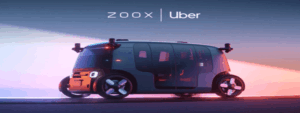
The robotaxis developed by Zoox are distinctive because they are fully autonomous vehicles designed specifically for passengers. Unlike conventional cars, they do not include a steering wheel or pedals, and their interior features face-to-face seating intended to maximize passenger comfort during short urban trips.
Initially, customers will be able to request a Zoox robotaxi for eligible trips on the Uber platform. In some cases, the vehicles may also remain available through Zoox’s own app. The goal of the partnership is to integrate autonomous vehicles into Uber’s existing ride-hailing network while allowing Zoox to expand its reach to millions of users worldwide.
Zoox’s Expanding Autonomous Fleet
Zoox has spent years developing its self-driving technology and testing vehicles across several U.S. cities. The company has already logged over one million autonomous miles and transported more than 300,000 riders during pilot programs and testing phases.
The company was acquired by Amazon in 2020 in a deal worth around $1.2–$1.3 billion, a move that allowed the e-commerce giant to enter the growing autonomous vehicle industry. Since then, Zoox has expanded testing and early services in cities such as Las Vegas and San Francisco, with additional trials planned in other markets across the United States.
Although Zoox is still considered smaller than some of its competitors, the partnership with Uber could accelerate its adoption by connecting the technology with one of the largest ride-hailing platforms in the world.
Uber’s Strategy: Partnerships Instead of Building Its Own Cars
Rather than developing its own autonomous vehicles from scratch, Uber has increasingly focused on forming partnerships with companies that specialize in self-driving technology. The Zoox agreement is part of a broader strategy that includes collaborations with multiple autonomous vehicle developers.
Uber executives believe that the company’s greatest advantage lies in its global platform and large user base, which can connect riders with different autonomous fleets. By acting as a marketplace for robotaxi services, Uber hopes to become a central hub for driverless mobility in the coming decade.
The company has already expressed ambitions to facilitate autonomous rides in around 15 cities worldwide by the end of 2026, signaling that robotaxis could soon become a major component of its business model.
The Growing Robotaxi Race
The partnership also reflects the intensifying competition in the autonomous mobility sector. Technology companies and automakers are investing billions of dollars in robotaxi development, hoping to transform urban transportation and reduce reliance on human drivers.
Industry analysts believe the global robotaxi market could eventually reach hundreds of billions of dollars, driven by advances in artificial intelligence, sensors, and electric vehicles. If autonomous systems prove safe and reliable at scale, robotaxis could significantly reduce operating costs for ride-hailing services and reshape the economics of urban transportation.
However, challenges remain. Regulatory approvals, safety concerns, and technological hurdles continue to slow the widespread adoption of driverless vehicles. Companies must also demonstrate that autonomous systems can operate safely in complex city environments before large-scale deployment becomes possible.
Investor Confidence and Future Outlook
Despite these challenges, investors reacted positively to Uber’s announcement, pushing the company’s shares higher. The market response suggests confidence that partnerships like the one with Zoox could accelerate the transition toward autonomous ride-hailing services.
If the planned launches in Las Vegas and Los Angeles succeed, the collaboration could represent an important milestone in the commercialization of robotaxis. For Uber, the deal reinforces its ambition to remain at the forefront of the evolving mobility industry, while for Zoox it offers a powerful distribution channel that could bring autonomous transportation closer to everyday consumers.
Together, the two companies are betting that the future of urban mobility will be autonomous, connected, and app-based—and that robotaxis will soon become a common sight on city streets.


