
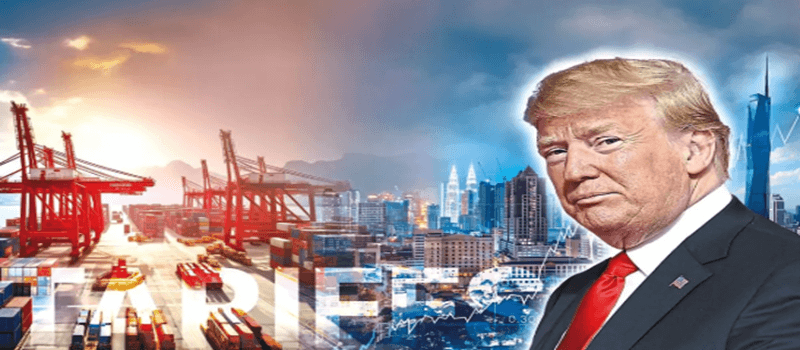

What’s Next for Global Trade After Trump’s 15% Tariff Hike?
The recent decision by President Donald Trump to impose a 15% global tariff on imports has sent shockwaves through the international trade community. Businesses, investors, and policymakers are now asking: What comes next for global commerce? The move, described by European officials as “pure tariff chaos,” has already triggered uncertainty in trade negotiations with the EU, UK, and Asia.
Key Impacts on Global Trade
- Supply Chain Disruption Companies reliant on cross‑border supply chains face rising costs. Industries such as automotive, technology, and consumer goods are particularly vulnerable.
- Rising Import Costs A 15% tariff translates directly into higher consumer prices, reduced profit margins, and increased inflationary pressure worldwide.
- Trade Deal Uncertainty Existing agreements with the EU, UK, Vietnam, and India are now at risk, undermining years of negotiation and investment.
- Financial Market Volatility Investors are bracing for turbulence in stock markets, commodities, and currency exchange rates, as global trade tensions escalate.
Strategic Business Responses
- Diversification of Supply Chains Firms may shift production to tariff‑exempt regions or invest in nearshoring to reduce exposure.
- Investment in Automation Rising costs could accelerate adoption of AI, robotics, and advanced manufacturing to offset labor and import expenses.
- Exploring Alternative Markets Emerging economies in Latin America and Africa may benefit as companies seek new trade partners.
Meta Title: Trump 15% Tariffs: What’s Next for Global Trade, Investors & the Economy (2025) Meta Description: Trump’s sweeping 15% universal tariff increase is reshaping international trade, supply chains, and investment strategies. Here’s what economists, businesses, and investors need to know right now. Focus Keyword: Trump 15% tariffs global trade Secondary Keywords: universal tariff increase, trade war 2025, global supply chain disruption, import duties, trade policy, economic impact tariffs, stock market tariffs, international trade agreements, inflation tariffs, recession risk tariffs
Trump’s 15% Universal Tariff: A Seismic Shift in Global Commerce
The announcement of a universal 15% tariff on virtually all imports entering the United States has sent shockwaves through global financial markets, international supply chains, and boardrooms from Beijing to Brussels. This sweeping trade policy move — one of the most aggressive protectionist measures in modern American history — is already triggering retaliatory responses, reshuffling trade alliances, and forcing corporations to fundamentally rethink their global sourcing strategies.
But what does this mean for the average consumer, the savvy investor, and the multinational corporation navigating an increasingly fragmented global economy? And more importantly: what comes next?
Understanding the Scope of Trump’s Tariff Escalation
Unlike previous targeted tariffs aimed at specific sectors like steel, aluminum, or Chinese technology goods, the 15% blanket import tariff applies across nearly all product categories. From consumer electronics and automotive parts to agricultural commodities and pharmaceuticals, no sector is immune.
This policy represents a dramatic escalation from existing trade frameworks, including those established under the U.S.-Mexico-Canada Agreement (USMCA) and various bilateral trade deals. The move effectively dismantles decades of trade liberalization and marks a decisive break from the post-WWII multilateral trade order anchored by the World Trade Organization (WTO).
Key economic indicators already responding to the announcement include:
- Equity markets: Volatility spikes across the S&P 500, Dow Jones Industrial Average, and Nasdaq Composite
- Currency markets: Dollar fluctuations as trading partners signal retaliatory measures
- Bond markets: Yield curve movements reflecting stagflation concerns
- Commodity prices: Disrupted pricing across oil, agricultural futures, and rare earth metals


